A floating frame is one of my favourite ways to finish a canvas painting. It gives the artwork a more considered, finished appearance while still allowing the edges of the canvas to remain visible.
The small gap between the canvas and the frame creates the illusion that the artwork is floating inside it — hence the name.
And the good news is that a simple floating frame can be made at home with relatively few tools.
In this guide, I’ll walk you through the basic process I use for measuring, building and finishing a wooden floating frame for canvas art.
Affiliate disclosure: This article contains affiliate links. If you purchase through one of these links, I may earn a commission at no additional cost to you.
1. What is a floating frame?
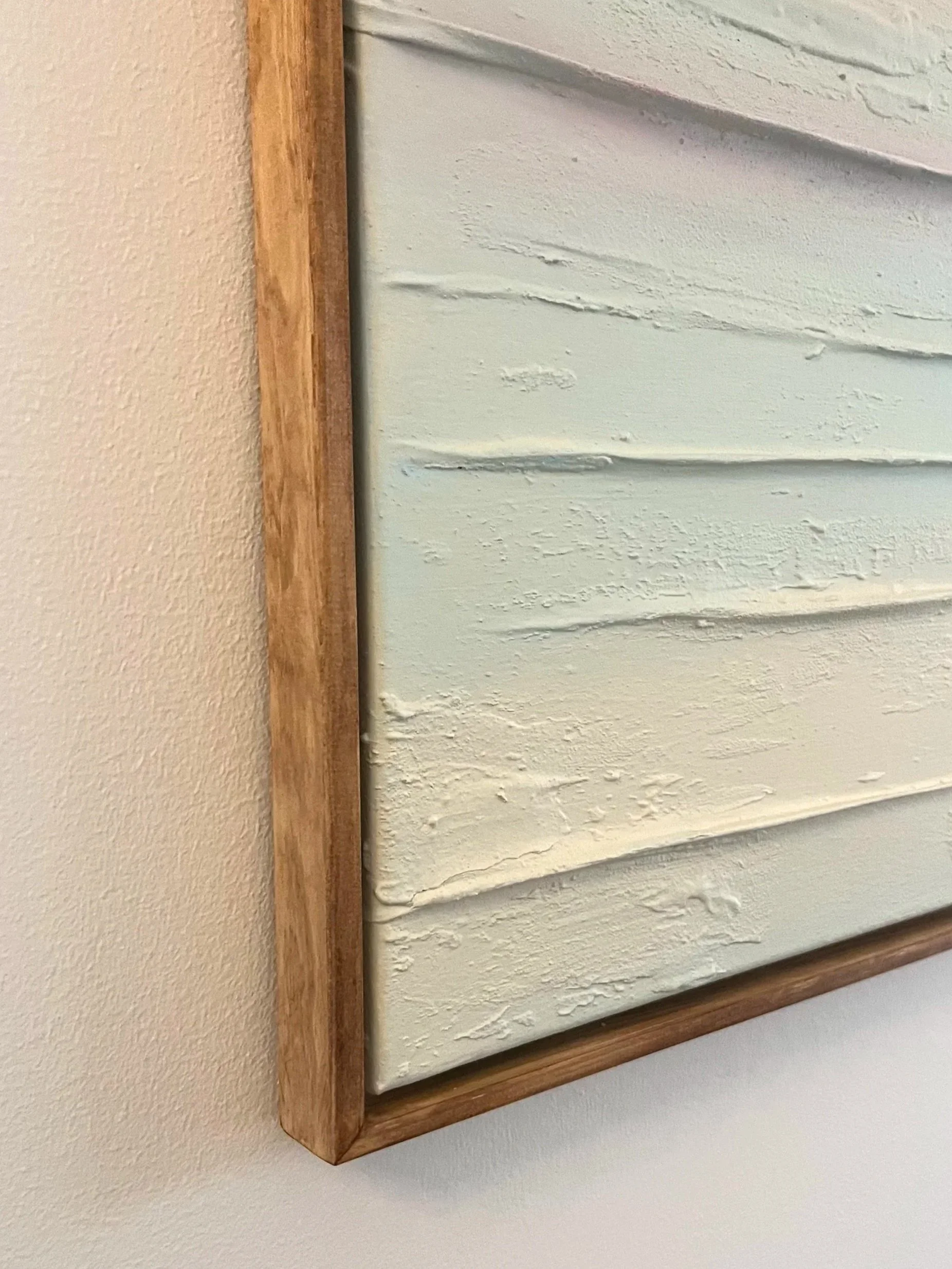
A floating frame is slightly different from a traditional picture frame.
Instead of covering the edge of the artwork, the frame sits around the canvas with a small visible gap between the canvas and the wood.
T
his gap creates a clean, modern look and works particularly well with stretched canvas.
I also like floating frames because they allow the depth and sides of the painting to remain part of the finished piece.
2. What you’ll need
Here is a list of what I have used: